
The appeal of danmei enemies to lovers is not simply watching two people argue until they fall in love. It is seeing two people understand exactly how difficult the other is, then decide to trust each other anyway. These eight novels offer very different versions of that tension: married life after a political wedding, a human-nature experiment gone wrong, a sick fox who knows how to handle a peacock, and high-risk dogblood that should not be mistaken for healthy romance.
1. Golden Terrace: The Emperor Accidentally Makes a Real Couple
You lose part of Golden Terrace if you treat it as an ordinary arranged-marriage romance. Yan Xiaohan and Fu Shen did not meet after their wedding. They already share a history from their youth. One is condemned as a court hound, while the other is a border general whose military power makes the emperor uneasy. The marriage is meant to keep them under control, but it brings together two people who understand each other's position better than anyone else.
The best part of their relationship is that they love each other's principles without asking the other to abandon them. Yan Xiaohan takes care of Fu Shen's injuries without treating him as helpless, and Fu Shen does not try to turn Yan Xiaohan into a conventional righteous official. Outside, there is imperial suspicion. At home, there is bickering, practical cooperation, and the feeling of a mature couple slowly settling into the same life.
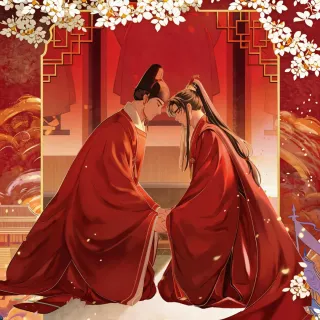
2. Thousand Autumns: Qian Qiu: Yan Wushi's Human-Nature Experiment Goes Wrong
Yan Wushi believes that human nature is fundamentally evil. When he finds Shen Qiao at his lowest point, he does not simply want to save him. He wants to see when this upright person will finally be forced to become corrupt. Shen Qiao refuses to follow that script. He has seen betrayal and cruelty, but still has the strength to choose what kind of person he wants to be.
The most distinctive part of YanShen is that neither man completely changes the other. Yan Wushi does not become a conventional good man for love, and Shen Qiao is not corrupted by him. One has to admit that an exception to his theory of human nature exists; the other learns to keep his judgment and sharpness even while holding on to his kindness. The romance is slow, and the wuxia story and character growth matter more than constant sweetness, but watching Yan Wushi's experiment fail is deeply satisfying.
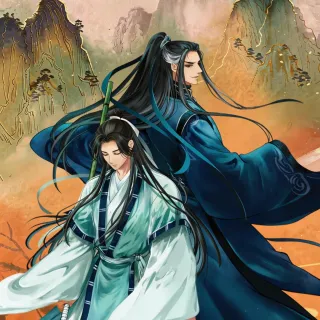
3. Peerless: A Self-Loving Peacock Meets a Sick Fox
Feng Xiao is powerful, beautiful, and sincerely convinced that no one in the world can match him. Cui Buqu has no martial arts skills and is chronically ill, but his mind and tongue are perfectly equipped to deal with Feng Er. One handles direct confrontation; the other reads people, controls information, and plans several moves ahead. They come from different intelligence organizations, so solving cases together also means competing over who gets the final advantage.
This is not a story about a fragile beauty waiting for protection. Cui Buqu may lose physically, but he never gives up the power to decide or the ability to control a conversation. Feng Xiao complains while gradually noticing his medicine, sleep, and health. The sweetness of FengCui is rarely stated directly. It hides in their mutual traps, private understanding, and the moments when one of them loses his composure. For adult banter with a real back-and-forth, Peerless is difficult to replace.
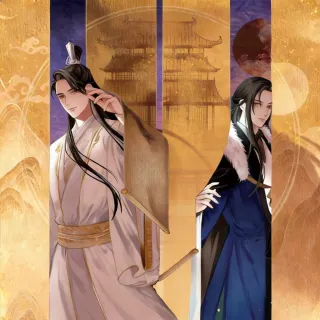
4. Ballad of Sword and Wine: Qiang Jin Jiu: Two Trapped Beasts Recognize Each Other's Ambition
The early tension between Ce'an and Lan Zhou is not simply an old grudge. Xiao Chiye and Shen Zechuan are both held in place by the centers of power in Qudu. One is a wolf that refuses to stay caged; the other is a fox hiding his fangs. They distrust each other and feel drawn to each other at the same time. Even a favor has to be sorted into attraction, a worthwhile alliance, or something the political situation simply demands.
What makes them so compelling is that they fall for the parts of each other that cannot be tamed. Xiao Chiye does not ask Shen Zechuan to abandon his ambition, and Shen Zechuan does not treat Xiao Chiye as a tool for revenge. They fall in love while building careers, political power, and a place they can call home. The cast, offices, factions, and military details are dense, though. The main couple is sweet, while the ensemble can be devastating, so a character list or a second read may help.
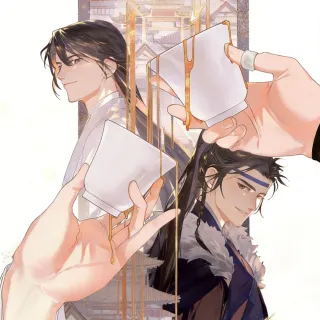
5. The Sword Named No Way Out: Jian Ming Bu Nai He: The Enemy Is Hidden Behind the Portrait of a Dead Wife
The opening of The Sword Named No Way Out knows exactly how to hook a reader. Xu Shuangce personally killed Gong Wei, and sixteen years later Gong Wei returns under another identity and has to remain under this supposed enemy's eyes. Even better, both men believe the other hates him beyond repair, while their actions keep exposing something that does not look like hatred. The idea that a portrait of a dead wife hides the face of an enemy is enough to make you keep reading.
Xu Shuangce is cold in words, while his actions keep leaking attachment. Gong Wei is a fox who can act and run, but he is not a helpless or naive beauty. The identity reveal, the old misunderstanding, and the romance are all part of the same mystery. This is not a standard regretful-ex chase. The pleasure comes from watching later truths translate many earlier scenes into something completely different.
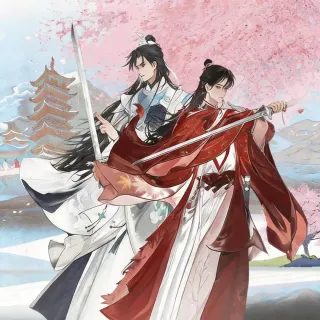
6. Drowning Sorrows in Raging Fire: You Are My Sword and My Scabbard
The early fun comes from the clash between ancient and modern life. Xuan Ji is flippant and almost sounds like an exhausted office worker, while Sheng Lingyuan has just stepped out of the distant past with all the dignity of an emperor. But JiLing is not a romance that starts from nothing. Their identities, memories, and old history are buried inside the modern reunion, and the further the story goes, the clearer it becomes why they feel familiar to each other and why they are also dangerous.
“Each other's sword and scabbard” fits them well. Both are sharp enough to hurt, and both have protected, restrained, and wounded the other. Xuan Ji's younger-man role is not a clingy puppy template, and Sheng Lingyuan is not a beautiful person waiting to be healed. The opening can be funny, but the setting and memory threads become much heavier later. Readers who enjoy romance and world-building truths unfolding together will feel the aftertaste of this one.
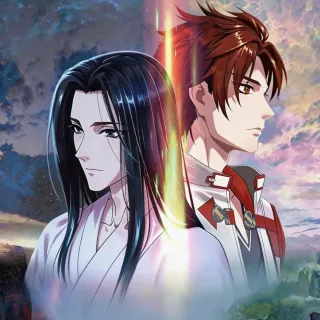
7. Remnants of Filth: Yuwu: The Brightest General Becomes a Traitor Everyone Hates
Mo Xi and Gu Mang were former comrades and lovers. When they meet again, Gu Mang has returned as a prisoner branded a traitor. Mo Xi still loves him, but does not know whether he can trust him. Readers keep asking the same question: what happened to the bright, outspoken commander who once put his comrades first?
Remnants of Filth is not a cheap redemption story for a “traitor.” Its deepest pain comes from asking whether ordinary soldiers are allowed dignity, who has the right to define loyalty, and how personal love can be torn apart by class and national narratives. The brighter the memories of Gu Mang's youth, the more painful the reunion becomes. Read this one for high-angst historical romance, not for an easy road to the happy ending.
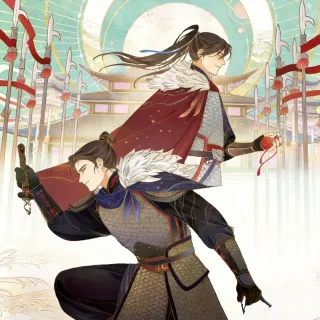
8. Lantern: Behold the Bayonet: Do Not Excuse Han Yue. Watch Chu Ci Pick Up the Knife
This is not a relationship to approach as a model of healthy love. Han Yue's control and violence toward Chu Ci are real, and the power imbalance does not disappear just because he later breaks down and lowers his head. Readers who love this novel often come for the high-risk dogblood: a possessive, violent man loses control, collapses, and is forced to face what he has done.
But Chu Ci is the character many readers remember most. He is calm, enduring, and capable of doing something ruthless when necessary. He is not an ice-cold beauty waiting for Han Yue to rescue him. He actively pushes the revenge plot forward. Chu Ci taking up the knife has more force than the simple idea of a mad dog becoming loyal. Read this only if you can accept coercion, violence, and a controversial regret arc. If you cannot, there is no reason to force yourself through it.
How to Choose Your First Book
Choose Golden Terrace for a mature couple learning to live together, Thousand Autumns for a clash over human nature, Peerless for two clever people constantly trapping each other, and Ballad of Sword and Wine: Qiang Jin Jiu for love and ambition developing side by side. Choose The Sword Named No Way Out for identity-reveal twists, Drowning Sorrows in Raging Fire for ancient mysteries in a modern world, Remnants of Filth: Yuwu for devastating historical romance, and Lantern: Behold the Bayonet only if you specifically want high-risk dogblood.
FAQ
Which danmei enemies-to-lovers novel should I read first?
Start with Golden Terrace. The arranged marriage, earlier history, and imperial suspicion are easy to follow, while the married-couple interactions arrive early enough to make the slow burn rewarding. If you want lighter banter between two clever partners, start with Peerless instead.
How are Ballad of Sword and Wine: Qiang Jin Jiu and Golden Terrace different?
Golden Terrace begins with marriage and focuses on two adults learning to understand each other again. The court plot mainly supports their relationship and ideas of loyalty. Ballad of Sword and Wine: Qiang Jin Jiu is much larger, combining romance, political alliance, military strategy, and a wide ensemble around Ce'an and Lan Zhou.
Is Thousand Autumns a typical enemies-to-lovers story?
It is, but not a simple hatred-to-attraction story. Yan Wushi wants to use Shen Qiao to prove that human nature is evil, while Shen Qiao continues to choose kindness after seeing cruelty clearly. Neither man completely changes the other, so the main appeal is their long argument over human nature rather than high-density romance.
Do these danmei novels need to be read in order?
No. Ballad of Sword and Wine: Qiang Jin Jiu, Thousand Autumns, Drowning Sorrows in Raging Fire, Remnants of Filth: Yuwu, Golden Terrace, The Sword Named No Way Out, Peerless, and Lantern: Behold the Bayonet are separate works. The order here is only a reading-entry recommendation.
Which novel is best for readers who enjoy powerful couples and political conflict?
Start with Ballad of Sword and Wine: Qiang Jin Jiu. Ce'an and Lan Zhou are lovers and political allies, but both keep their own ambitions and careers. Choose Golden Terrace for less faction-tracking and more marital cooperation, or Peerless for rival intelligence organizations and case-solving banter.
Which novel focuses most on ideological conflict?
Thousand Autumns puts it most directly on the page. Yan Wushi believes that human nature is evil, while Shen Qiao shows that kindness can be a deliberate choice made after recognizing cruelty. Their eventual acceptance of each other's existence is more interesting than a simple “love made him a better person” plot.
Are danmei enemies-to-lovers novels mostly historical or ancient fantasy?
No. Golden Terrace, Thousand Autumns, Peerless, Ballad of Sword and Wine: Qiang Jin Jiu, The Sword Named No Way Out, and Remnants of Filth: Yuwu use historical, wuxia, or fantasy settings. Drowning Sorrows in Raging Fire places the relationship in modern urban fantasy, while Lantern: Behold the Bayonet is a modern dark revenge story. The two modern novels have very different emotional registers.
Can I read these novels if I do not enjoy romanticizing harm?
Start with Golden Terrace, Peerless, or Thousand Autumns. Their main pleasures come from mutual understanding, complementary abilities, and arguments over values. Remnants of Filth: Yuwu includes stigma, war, and severe emotional harm. Lantern: Behold the Bayonet includes coercion, violent control, and a serious power imbalance. It is completely reasonable to skip either one.
Sources
- Seven Seas: Qiang Jin Jiu
- Seven Seas: Thousand Autumns
- Seven Seas: Golden Terrace
- Seven Seas: The Sword Named No Way Out
- Seven Seas: Peerless
- Crunchyroll: Drowning Sorrows in Raging Fire
- Douban: Golden Terrace reviews
- Douban: Thousand Autumns discussion
- Douban: Peerless reviews
- Douban: Qiang Jin Jiu reviews
- Douban: The Sword Named No Way Out
- Douban: Drowning Sorrows in Raging Fire reader review
- Douban: Remnants of Filth reviews
- Douban: Lantern: Behold the Bayonet discussion
- Golden Terrace
- Thousand Autumns: Qian Qiu
- Peerless
- Ballad of Sword and Wine: Qiang Jin Jiu
- The Sword Named No Way Out: Jian Ming Bu Nai He
- Drowning Sorrows in Raging Fire
- Remnants of Filth: Yuwu
- Lantern: Behold the Bayonet


0 comments